
Books/ Brackish
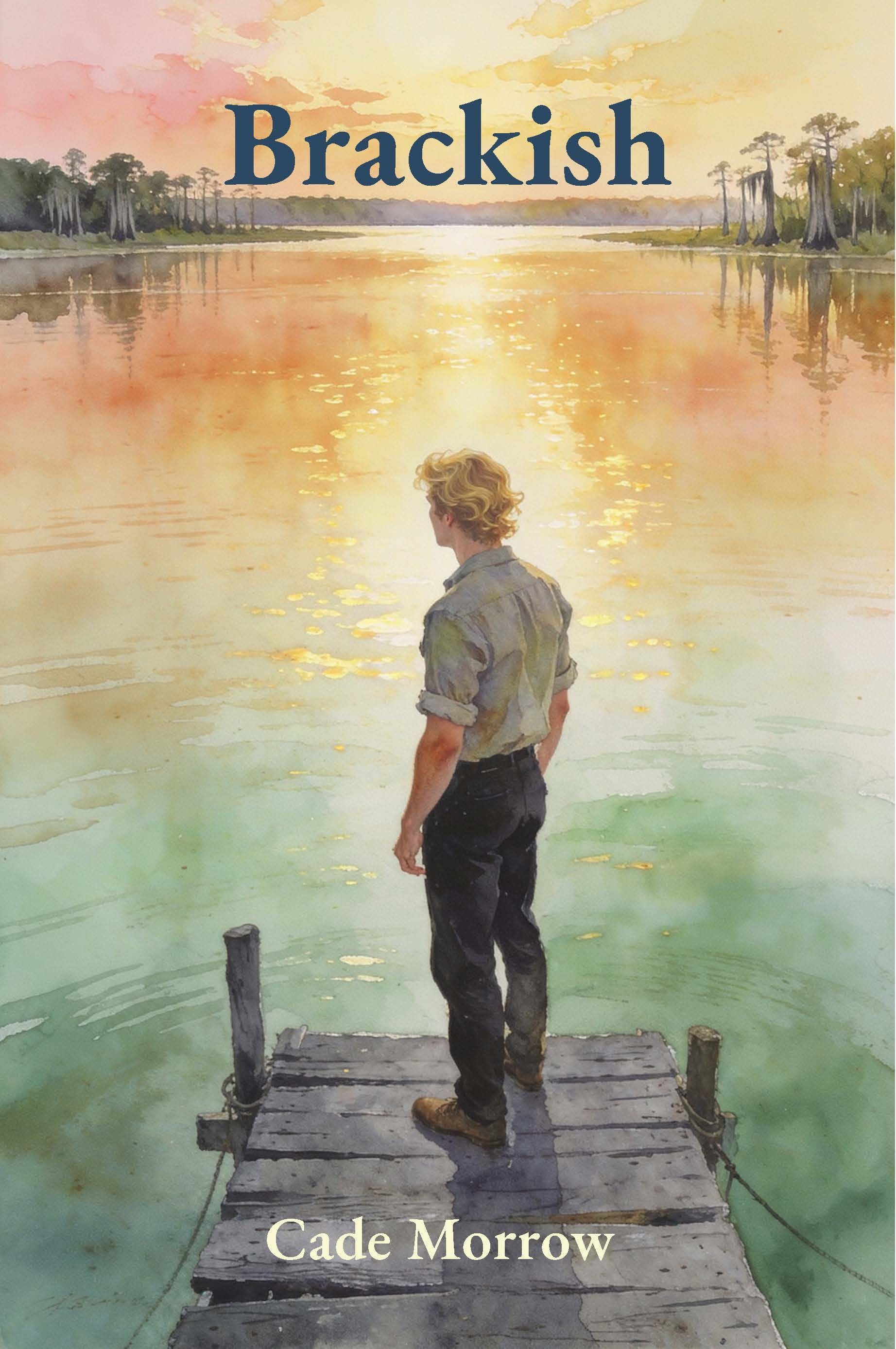
A Standalone Novel
Brackish
Three families, one fish camp, a lifetime of shared summers, and the crossing a man never made.
In the Mobile-Tensaw Delta, where the water is neither fresh nor salt but brackish, three families share a fish camp by the month, summer after summer. Brackish is the spare, elegiac story of a man who spent his life sixty yards from what he wanted and never crossed to it, and of the long, quiet reckoning that, after many years, finally brings him to his feet.
A Southern literary novel of the Mobile-Tensaw Delta, by Cade Morrow.
Available on Amazon.
About the book
The camp sat twelve miles off the county road, on a tributary of the Delta where the river meets the Gulf, and three families shared it by the month: one in June, one in July, one in August, with a day at each end for the handoff. Year after year the same people overlapped in the same rooms. Year after year a man looked across the water at the life he wanted, and did the arithmetic, and stayed on the near bank.
He was not a villain and he was not a coward. He looked across, and the arithmetic was not even wrong. The years went.
Brackish is the story of that man and that water, part fresh, part salt, changing with the rain upstream and the tide below, and of a longing carried so long it became a way of living. It does not end with a crossing. It ends with something smaller, and harder, and truer.
Read the opening
Chapter 1
There are things you remember whole. Not the shape of them, not the weather or the year, but the ordinary particular fact of what happened, preserved in that clean impossible detail that only certain memories keep: the color of a car, the sound a screen door made when someone who was not yet anyone to you walked through it, the way a man stepped out of that car before it had fully stopped and stood in the yard with his hands loose at his sides and looked at the water as you look at a place you already know you’re going to like. I have tried for twenty-three years not to remember that summer whole, and trying has not worked, and so I am telling it now because the only thing worse than remembering is the particular silence of never having said it to anyone.
The camp was on the tributary, twelve miles off the county road through sweetgum and water oak, and three families shared it by the month: ours in June, the Renaults in July, the Latimers in August, with a day at each end for the handoff when two families would overlap long enough to walk the rooms together, check the boats, pass the keys. My father had arranged it that way. He had a talent for arrangement, for the ordering of things into systems that did not require his ongoing explanation because the systems themselves were the explanation, and once they were set they ran, and we ran inside them.
We had been at the camp a week already when the Renaults came down for their July turn. They arrived on a Sunday afternoon in a green DeSoto with a cracked windshield and a canoe roped to the roof, and my father was on the porch before they had the engine off. He stood with his arms at his sides and watched them come up the slope from the dirt track as he watched things at the yard when a customer brought in an engine he could not price on sight, something he had not encountered before and was not yet sure how to categorize. Not suspicion. Not hostility. Something closer to the attentiveness of a man who has found a thing outside his usual inventory and is deciding, quietly and without hurry, where it belongs.
What the book is about
There are men all over this country who have spent their lives sixty yards from the life they wanted and never once got in the water.
Set in the Mobile-Tensaw Delta, Brackish takes its title and its whole logic from the water where the river meets the Gulf: part fresh, part salt, changing with the rain upstream and the tide below. Three families share a fish camp by the month across a run of summers, the same people overlapping in the same rooms year after year, and at the center is a restrained, unspoken longing carried so long it becomes a way of living. It is a novel about the near bank and the far one: the life a man wants, sixty yards off, and the crossing he never makes. Spare and tidal in its telling, it ends not with a leap but with something quieter and truer.
Book details
- Author Cade Morrow
- Format Standalone novel
- Genre Southern literary fiction, LGBTQ+ fiction
- Setting Mobile-Tensaw Delta, Alabama
- Length About 57,000 words, 12 chapters
If you like
Readers of Garth Greenwell's What Belongs to You and the ache of a longing never fully acted on, told with the spare, moral quiet of Claire Keegan's Small Things Like These , in the Gulf-Delta South. Adult literary fiction with a gay protagonist, literary, restrained and tidal, not genre romance.
More from Cade Morrow
Brackish stands on its own. If you want more of the South in Cade's pages, read Someday, a quiet novel of south Mississippi, Common Ground, a love story set in rural Alabama, for a younger-reader novel on the same coast, Jubilee, or start the Ebb Tide series on the Gulf Coast with Still Waters. Browse all of Cade's novels.
About the author
Cade Morrow writes quiet, deeply felt literary fiction set in the small towns and back roads of the American South, in a plainspoken voice concerned with memory, place, and the private weather of ordinary lives. A son of the Deep South, he writes from the heart, telling stories of life in the LGBTQ+ community, some drawn from his own experience, others from the compassionate observation of the people around him. Read more about Cade.
Cross to the far bank.
Find it on Amazon