About Cade Morrow
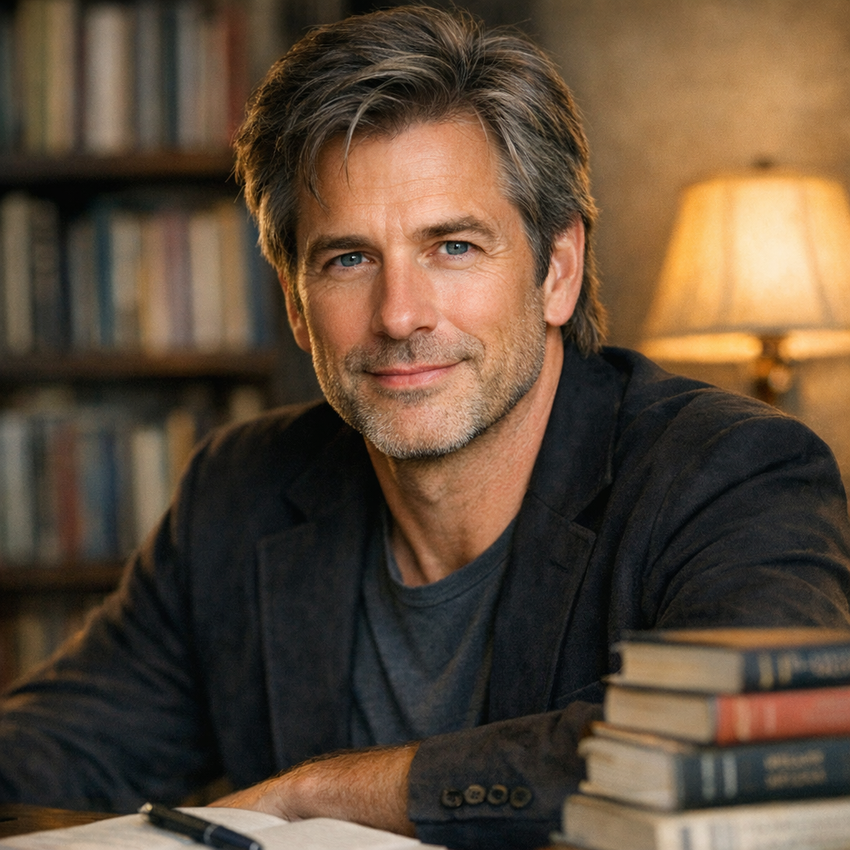
Cade Morrow grew up on Florida's Gulf Coast Panhandle, where the water runs green over white sand and the light in late summer goes amber before it goes dark. He spent the better part of four decades learning the silence his era required, and learning what his characters learn: that invisibility is a skill, and the cost of it compounds.
He writes about men who loved carefully, in places and decades that gave them no room to, and built lives anyway. Career officers and farmers, sons of small towns, men who priced every word they said in daylight. The books are set where he knows the ground, the Panhandle, rural Alabama, south Mississippi, Natchez across the years when saying the true thing out loud could cost a man everything.
In his mid-twenties he volunteered at an LGBTQ+ youth center. That is where the conviction behind the books settled. He reads widely, literary fiction, contemporary romance, queer memoir, the occasional doorstop fantasy, and credits Kent Haruf, Andrew Holleran, Garth Greenwell, and Jim Grimsley with shaping what felt possible.
He lives on the Gulf Coast. The Gulf insists on itself, on its light and its weight and its own version of time, and he has stopped trying to live anywhere it cannot reach him.
Fiction is a mirror, and for a lot of queer readers it is the first one that shows them whole.
~ Cade Morrow
What I Won't Do
No one in these books is punished for who he loves. Grief is not the price of having loved, and joy is not something a man has to earn by suffering first. That is not a promise that every story ends happily, some of them end honestly, which is harder. It is a promise about what I will not do to these men in order to make a plot work.
The other thing I won't do is explain. These books are written toward the reader who already knows, and they trust everyone else to follow.
What I Will Do
Give every man in them a life outside of who he loves, work he is good at, people who need him, a Saturday. Let them be funny. Let the card games and the unloading of the car be ordinary, so the rest has something to rise from. Put the feeling in the body and in the room, and let the reader find it there.
And say the true thing, eventually. Late, and in the shortest words available, the way men like this actually say it.
Frequently Asked Questions
What kind of books does Cade Morrow write?
Southern literary fiction about men shaped by the American South and by the silence that follows love kept hidden. The books are LGBTQ+ love stories, set from the Gulf Coast and Mobile Bay to the Georgia tidewater and the Natchez bluffs.
Where should I start?
For a series, start with Still Waters, the first Ebb Tide book. For a single book, Common Ground and Someday each stand alone.
Do I have to read the books in order?
Only the Ebb Tide trilogy: Still Waters, Landfall, then Slack Water. The other novels stand alone, though a few share characters and places.
What is the Ebb Tide trilogy about?
Two career military officers and twenty years of a relationship the country would not name, set against Don't Ask, Don't Tell and its repeal.
Are these romance novels?
They are love stories, but literary fiction, not genre romance. The emotion comes through scene and gesture, over years.
Where are the books set?
Mobile Bay and the Tensaw Delta, south Mississippi, rural Alabama, Natchez, the Georgia coast (Sourwood), and French colonial Louisiana (The King's Hyacinth).
Is there a book for younger readers?
Jubilee is the only title written for young teens and young adults. The rest are for adult readers.
Where can I buy the books?
Every title is on Amazon in paperback, and each book page links straight to its listing. Nine of the ten are also available as Kindle eBooks (Sourwood is in paperback for now), and Common Ground is also available in hardcover.